Operations
Restaurant Food Waste: How Taquerías Can Save $10,000+ Per Year
By Tacoter Team · June 2, 2026 · 4 min read
Food waste is the most invisible expense in a restaurant, because it leaves in a trash bag instead of on an invoice. For a taquería doing $600,000 a year with a 4–8% waste rate, that bag is worth $10,000 to $25,000 annually.
How much food waste costs restaurants
Industry studies consistently put restaurant food waste between 4% and 10% of food purchases. Take the middle of that range:
| Annual sales | Food purchases at 31% | Waste at 6% | Recoverable at half |
|---|---|---|---|
| $400,000 | $124,000 | $7,440 | $3,720 |
| $600,000 | $186,000 | $11,160 | $5,580 |
| $900,000 | $279,000 | $16,740 | $8,370 |
| $1,200,000 | $372,000 | $22,320 | $11,160 |
The last column is the realistic prize. Nobody gets to zero waste — trim and shrink are physics. Cutting waste in half is achievable in a quarter, and unlike a price increase it costs the customer nothing. Organizations like ReFED publish detailed food-waste economics if you want the sector-level numbers.
Where taquerías waste the most food
1. Over-prepped proteins
Braised birria and carnitas are prepped in batches, and batches are sized by feel. Prep for Saturday volume on a rainy Wednesday and the difference goes in the bin — or into a discounted plate that eats your margin anyway.
2. Salsas and cut produce
Avocado, cilantro, tomato, and cut onion are the shortest-lived, most expensive items in the walk-in. A single case of avocados turning is a $60 loss nobody writes down.
3. Rice and beans held too long
Cheap per pound, huge by volume. Two hotel pans a week is over $2,000 a year.
4. Over-portioning
This is waste that leaves through the front door. Freehanded meat runs 10–20% over spec, which looks like generosity and reads like a 3-point food cost increase.
5. Complimentary chips and salsa
Half-eaten baskets, unlimited refills, salsa cups by the fistful. Real money, entirely untracked.
6. Tortillas
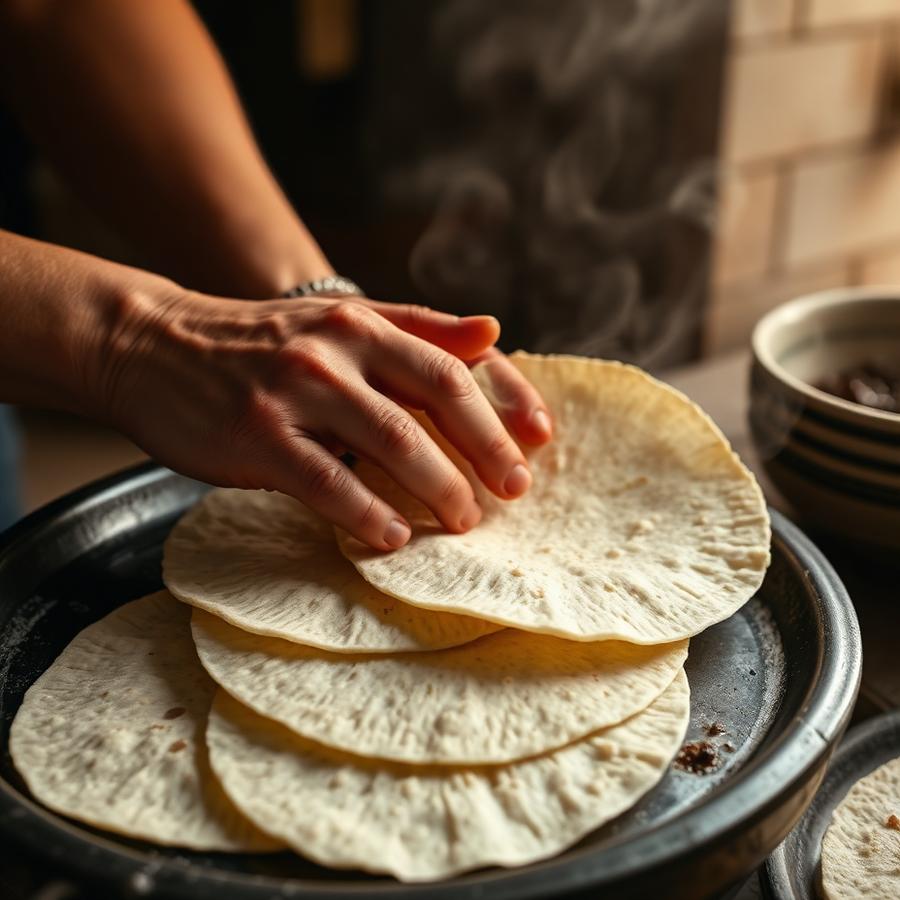
Stale, dropped, or torn on the comal. Small each time, constant all day.
Tracking your food waste
Any tracking beats no tracking. Keep it to under two minutes per shift or your staff will stop.
- 1Put a labeled waste bin and a clipboard (or a tablet) at the end of the line.
- 2Log three fields only: item, rough amount, reason (spoiled, over-prepped, dropped, returned).
- 3Review weekly, not daily. You're looking for patterns, not incidents.
- 4Attack the single biggest line first. There's always one item that's a third of the total.
- 5Recount after two weeks to confirm the fix held.
Waste logging is also the diagnostic for your food cost percentage. If plate costs say 30% and the period says 36%, the six points are hiding in this log — see How to Calculate Food Cost.
Storage best practices
- FIFO with real date labels. Not tape, not memory — labels with a date and initials.
- Store cut produce above raw proteins and keep the walk-in at 38°F or below; verify with a thermometer weekly.
- Portion braises into shallow pans so they cool fast and hold quality on day two.
- Vacuum-seal or freeze surplus braised proteins in single-service portions. Birria freezes well; cut salsa does not.
- Keep avocados out of the coldest zone and buy in staggered ripeness.
- Photograph a properly organized walk-in and tape the photo to the door. It's the cheapest training tool there is.
Prep optimization strategies
- Write prep pars by day of week, not one number for all seven days.
- Prep in two smaller waves instead of one large morning batch on slow days.
- Cross-utilize aggressively: yesterday's asada becomes today's chilaquiles or a torta special; the consomé base carries into soups.
- Use scoops and scales on the line for every protein.
- Run a same-day "últimos" special at 8 PM on anything that won't hold — a small discount beats a total loss.
- Tie pars to a forecast rather than yesterday's mood.
How AI detects food waste automatically
The reason waste programs fail is human: it's one more clipboard on the busiest station in the building. Tacoter closes the loop from data you already generate.
- AI Food Waste Reduction reconciles purchases against items actually sold and flags unlogged waste — the gap between what you bought and what left as revenue.
- It identifies patterns by day and item: "carnitas over-prepped on Tuesdays for six weeks, roughly $180/month."
- Quick logging by voice, so a cook can say what got thrown out without stopping to type.
- AI Order Prediction forecasts tomorrow's volume using history, weather, and local events, so pars are set against demand instead of guesswork.
- AI Price Optimization catches the other side of the problem: items whose ingredient costs have risen faster than their menu price.
“The report told us we were throwing away about ninety dollars of rice and beans a week. Ninety dollars. We fixed the pars in one afternoon.”
About the author
The Tacoter Team builds ordering websites and AI tools for taquerías and Mexican restaurants across the U.S. We write about margins, marketing, and operations from what we see in real restaurants every week.
Ready to grow your taquería?
Start reducing waste today. Your own ordering website, your customer list, and AI tools built for Mexican restaurants.